
WISPA Spotlight: BTWI
Built for Need – BTWI
Bits of Technology Wireless Internet (BTWI) is a story rooted in necessity, resilience, and community. Founded in 2009 by Nathan Leerhoff, the company began when he built a tower to bring reliable internet to his rural Iowa home—an effort that quickly expanded as neighbors sought the same connectivity.
By 2012, Nathan and his father Jeff committed fully to the business, leaving their full-time jobs to grow BTWI into a regional provider. Over time, the company expanded to nearly 80 tower locations, delivering service across multiple Iowa counties and earning a reputation for speed, reliability, and customer care.
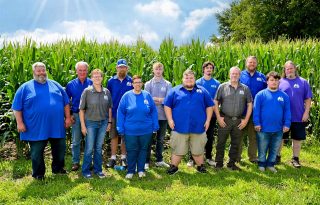
BTWI’s journey hasn’t been without challenges. The loss of Jeff in 2021 marked a difficult chapter, but the team carried forward his vision with determination. Continued innovation—including next-generation fixed wireless capable of delivering up to 500 Mbps—has kept BTWI at the forefront of rural connectivity.
Even after a devastating fire forced relocation in 2025, BTWI has remained steadfast. Built on resilience and a commitment to underserved communities, the company continues to expand its network and deliver high-quality broadband—proving that even the toughest obstacles can’t stop a mission-driven provider.
Today, BTWI continues to build on that momentum, now serving nearly 2,000 customers across central Iowa with a team rooted in the Perry community. Central to that growth has been fixed wireless access—particularly CBRS technology—which enables BTWI to deliver fiber-like speeds across farmland and rural terrain without the cost and disruption of traditional builds. With more than $1 million invested in CBRS since 2024, the network now supports not only homes and businesses, but critical services like municipal operations in nearby communities. As BTWI moves into 2026, its focus remains clear: leveraging innovative wireless technologies to expand reach, improve performance, and ensure rural residents have access to the same high-quality connectivity as their urban counterparts.